
The treatment of cancer diseases has seen huge leaps in innovation over the past few decades. Although surgical procedures, chemotherapy, and standard radiotherapy still remain major treatment methods, more advanced treatments have emerged that help doctors achieve better outcomes with fewer side effects.
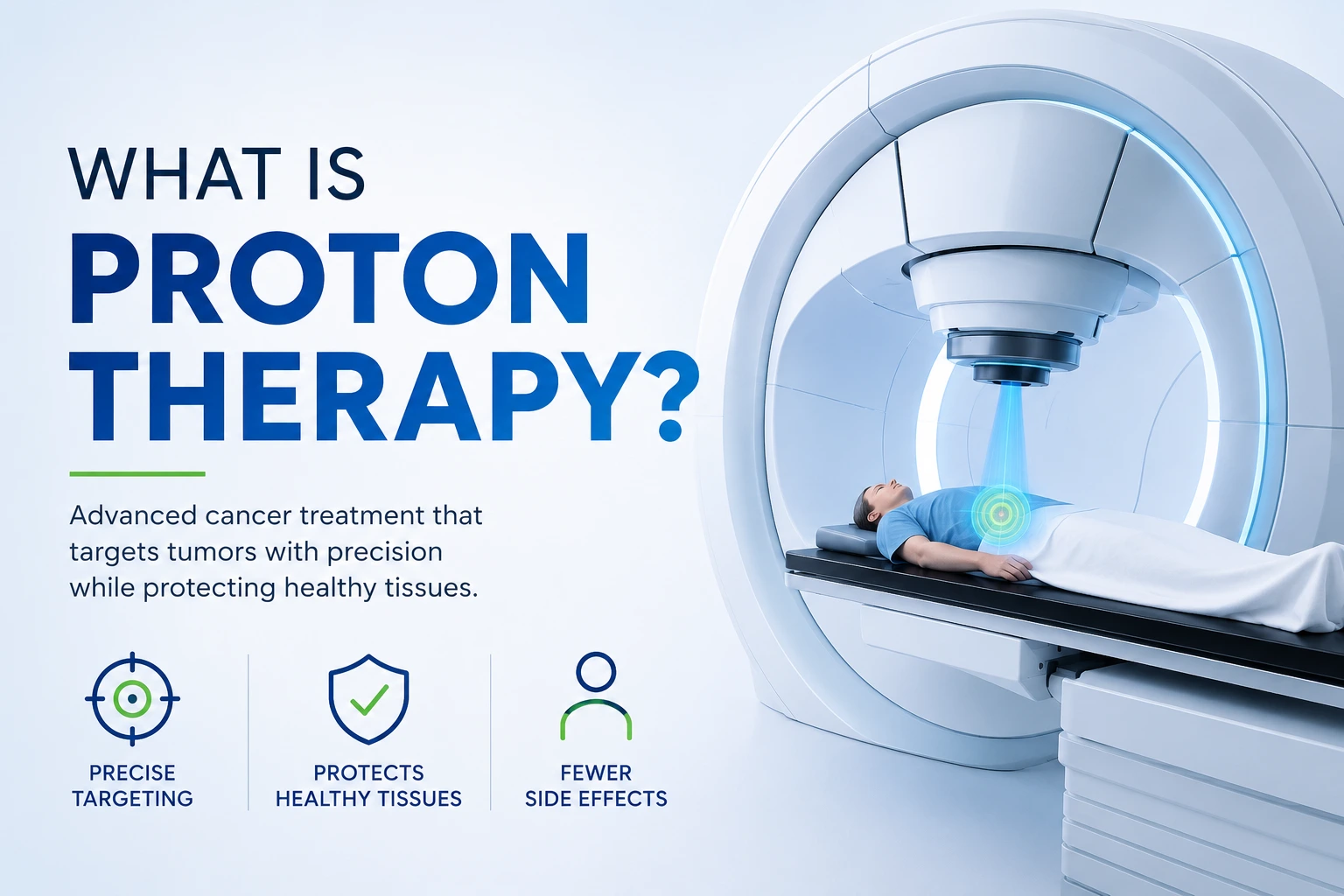
One of the innovations in radiation oncology is called Proton Therapy – an advanced radiation procedure that utilizes protons to precisely deliver radiation at specific areas of the body. The advantage of proton therapy over other forms of radiation therapy lies in its ability to irradiate only the target spot without exposing adjacent tissues or vital organs to unnecessary radiation.
With the advent of precision medicine, proton therapy has become increasingly popular globally because of its ability to successfully treat certain cancers without causing unwanted complications during treatment. It is highly beneficial in cases when tumors occur in close proximity to vital organs or in children who require extra protection of their healthy tissue.
Here, we will talk about what proton therapy is and how it is done, and list its benefits and side effects.
Proton therapy is an external-beam radiation treatment that uses positively charged particles to damage tumour-cell DNA. Its main advantage is the ability to deliver most of the radiation dose at a controlled depth, potentially reducing exposure to nearby healthy tissues. It is beneficial for selected patients, but it is not automatically superior for every cancer.
What Is Proton Therapy?
Proton Therapy is an advanced type of radiotherapy that uses positively charged particles referred to as protons to eliminate cancer cells. Proton beam therapy, as it can also be termed, is a medical procedure where radiation is delivered straight into the tumor but does not affect surrounding normal tissues. Similar to regular radiation, proton therapy functions by damaging the genetic material of the cells in order to impede the cell growth and division process. The difference between the two lies in the manner in which the particles enter the human body.
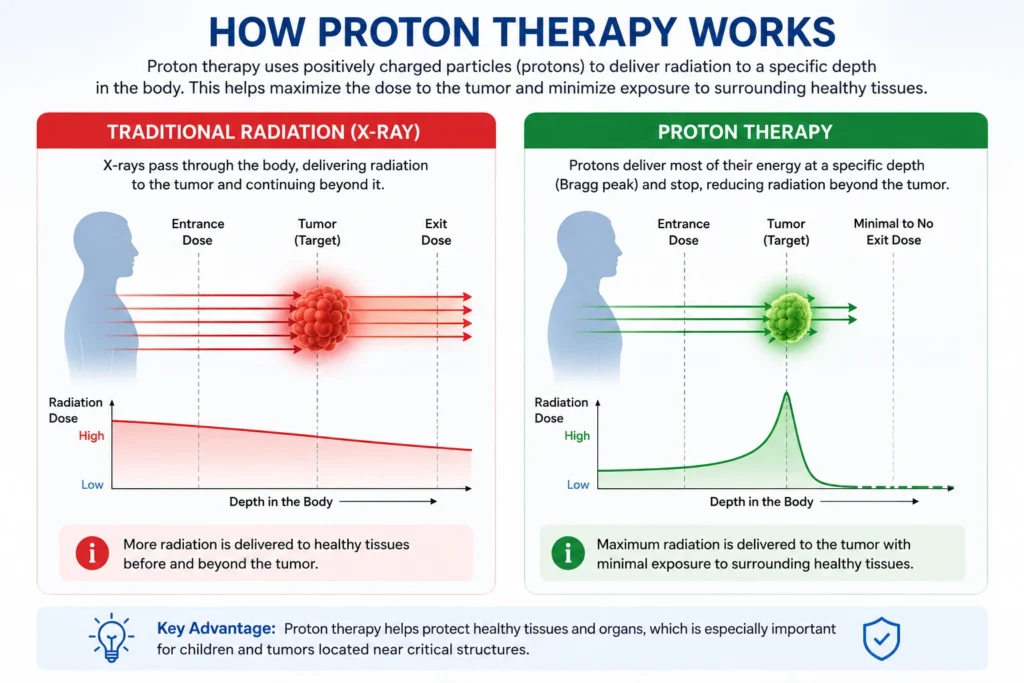
In order to conduct proton beam therapy, a machine that speeds up protons, i.e. accelerates them, to high velocity is used. Once the protons achieve maximum velocity, they are delivered directly to the tumor. The main benefit of proton therapy is that the particles emit most of their energy at a certain depth, a process known as the Bragg Peak.
Proton Therapy and Conventional Radiation
Conventional radiation is based on X-rays or photons that penetrate the human body and travel farther than the tumor. Although highly efficient, some amount of radiation always passes through healthy tissue before reaching the tumor and afterwards.
Proton therapy, on the other hand, involves delivery of radiation only into the target with almost no exit radiation. That is why it is regarded as one of the most innovative types of radiation treatment nowadays.
The Working Principle of Proton Therapy
Knowing how proton therapy works, patients can be better prepared for the procedure.
What Are Proton Beams
Protons are positively charged atomic particles. Using special devices, proton beams are generated in order to hit the tumor. The energy level of the beam can be set precisely by doctors depending on the location of the cancerous formation.
How Proton Radiation Treats Cancer Cells
Upon entering the body, protons emit energy that damages the DNA inside cancer cells. Consequently, cancer cells are no longer able to multiply and grow. Injured cancer cells finally die. Unlike traditional therapy, radiation can only be applied to the tumor, sparing surrounding healthy cells.
The Planning Process Before Treatment
Before starting radiation treatment, patients go through a complex planning process that usually involves:
- Consultation with a doctor
- Physical examination
- Taking CT scan images
- Optional taking MRI images
- Mapping tumors and simulating treatment procedures
Radiation specialists including a physician-oncologist, physicist, and treatment planner, make individual treatment plans depending on cancer type, location, and patient’s condition.
What Is Going On During Proton Therapy?
While undergoing radiation:
- Using imaging equipment, the correct location for the treatment is identified.
- Protons are directed at the target area using an appropriate technique.
- Patient is conscious during the whole procedure.
- Most treatments will take 15-45 minutes, even though radiation is administered only a few minutes.
- Patients leave the hospital straight after the procedure.
Pros of Proton Beam Treatment
Proton beam therapy is associated with a number of advantages in case it is prescribed to certain patients.
Targeting the Tumor with High Precision
The main advantage of proton therapy consists in delivering radiation directly into the tumor with a very high accuracy. This allows doctors to treat cancer by sparing nearby healthy tissue.
Minimized Radiation Doses for Healthy Organs
As a result of stopping in the target area, there is no chance that protons can irradiate other body organs and tissues. In particular, such a therapy is preferable in cases where the tumor is situated near:
- Brain
- Eyes
- Heart
- Spinal cord
- Liver
- Lungs
Decreased Radiation Level
In comparison with traditional radiation therapy, proton beam treatment allows reducing exposure of healthy organs to radiation. It can lead to minimizing the risk of developing certain complications associated with treatment.
Minimal Side Effects
A patient experiences minimal side effects due to lower levels of radiation for healthy tissue.
How much damage is done depends on:
- Type of cancer
- Position of the tumor
- Amount of radiation received
- Patient-specific factors
Better Quality of Life
Minimizing the effects of radiation could make it easier for people to go about their day-to-day lives while being treated.
Improved Treatment for Sensitive Areas
When the cancer is in a position that makes it difficult to minimize damage to vital organs, proton therapy can prove very useful.
Treatment for Childhood Cancers
Children are even more sensitive than adults to the effects of radiation due to their rapidly developing bodies. Proton therapy may minimize the effects of radiation to surrounding tissues.
Types Of Cancer Treated by Proton Therapy
Various types of cancer may be treated using proton therapy, but some are more common than others:
- Brain Tumors
Brain tissue is highly vital, it may require precise targeting that only proton therapy offers.
- Prostate Cancer
Most prostate cancer sufferers may benefit from proton therapy that spares surrounding organs such as the rectum and bladder.
- Breast Cancer
For some patients with breast cancer, proton therapy could help lower their radiation exposure to the heart and lungs.
- Lung Cancer
Proton therapy could be an option for some patients with lung cancer who need to protect healthy tissues.
- Liver Cancer
Using proton therapy with high precision can enable the therapy to target liver tumors without causing damage to healthy liver tissues.
- Pediatric Cancers
Some children with cancer could benefit from proton therapy because it reduces radiation exposure to sensitive organs.
- Head and Neck Cancers
Proton therapy can be used to treat difficult tumors close to the eyes, salivary glands, spinal cord, and brain.
- Spine Tumors
Spinal tumors near the spinal cord that are hard to reach can be effectively targeted with proton therapy.
Proton Therapy vs Traditional Radiation Therapy
Although both treatments use radiation to destroy cancer cells, they differ in how radiation is delivered.
| Factor | Proton Therapy | Photon Radiation |
|---|---|---|
| Radiation source | Positively charged protons | High-energy X-rays |
| Dose beyond tumour | Rapid fall-off after the target | Continues beyond the target |
| Healthy-tissue exposure | May be lower in selected plans | May be higher depending on location |
| Availability | Limited to specialised centres | Widely available |
| Cost | Usually higher | Generally lower |
| Best suited for | Selected tumours near sensitive structures, children and some re-irradiation cases | Effective standard treatment for many cancers |
| Overall effectiveness | Depends on cancer and patient selection | Well established across many cancer types |
It must be noted that neither form of treatment is ideal for all patients at all times and is dependent on the cancer type, location, goals of the treatment, and advice of doctors.
Who Can Get Proton Treatment?
There are various conditions when a doctor may recommend proton treatment. Among them are:
- Patients with localized cancerous tumors
- Children with cancerous tumors
- Patients with tumors close to critical areas
- Cases of necessary highly focused radiation
- Recurrent cancer cases
- Patients who can gain benefits from lower radiation impact on healthy cells
The list of patients eligible for proton therapy is provided by doctors specialized in radiation oncology.
Side Effects of Proton Treatment
As with any other cancer therapy, proton treatment causes certain side effects.
Nevertheless, due to minimal radiation exposure, proton radiation usually involves fewer side effects than conventional radiotherapy does.
Common side effects are:
- Fatigue
- Many patients report being fatigued during treatment sessions or after them.
- Skin Irritation
- The skin under treatment may be somewhat red, sensitive, and dry.
Short-Term Inconveniences
Depending on the site where treatment is applied, there can be some short-term inconveniences due to inflammation and tissue reaction.
Medical Consultations Importance
The effects caused by the treatment will depend on the following factors:
Site of treatment
Amount of radiation exposure
Health condition of the individual
Reaction of the patient to the treatment
It is recommended that patients have consultations to discuss their condition.
What to Expect During the Proton Therapy Treatment
Having information regarding the treatment process will facilitate preparing for the procedure.
Before Treatment
Before receiving the treatment, patients usually have:
Visit with a radiation oncologist
Various imaging tests
Treatment planning
Simulations
A personalized treatment plan is created before the procedure.
During the Treatments
The process involves lying down on a treatment table while the proton beam works on the treatment site.
The process is both painless and non-invasive.
Patients can continue with all their regular duties during the treatment.
Follow-up After the Procedure
After completion of the treatments, patients are supposed to visit doctors to:
Evaluate treatment effect
Detect side effects and complications
Monitor recovery progress
Make an evaluation of the treatment outcome
Imaging and medical exams will determine treatment effectiveness.
Latest Innovations in Proton Therapy
The latest innovations in proton therapy have made it more effective and more accurate than ever before.
Some of the recent advancements include:
Image-Guided Proton Therapy
State-of-the-art imaging techniques are used to increase accuracy by determining the exact location of tumors prior to and during the therapy process.
Integrating Precision Oncology
The latest technologies allow oncologists to incorporate personalized treatment approaches in their plan.
Improved Tumor Targeting Techniques
With state-of-the-art software, radiation oncologists can develop customized treatment plans tailored for each individual patient.
Advanced Proton Therapy Delivery Systems
The latest delivery systems allow for more accurate control of proton beams. These innovations have played a vital role in improving proton therapy’s efficacy.
Conclusion
Proton Therapy is undoubtedly one of the milestones that cancer treatment has reached today. The use of proton beams provides an excellent opportunity to target tumor sites while limiting exposure of other parts of the body to radiation.
Thanks to its potential benefits in terms of reduced radiation exposure, side effects, and protection of vital organs, proton therapy has been a significant part of the treatment of many types of cancer, such as brain cancer, prostate cancer, breast cancer, pediatric cancers, and head and neck cancers.
Though proton therapy cannot be considered necessary for all patients who have cancer, its significance in modern oncological practice is increasing. When making a decision about undergoing proton therapy, one needs to seek the opinion of a competent specialist.
In case you have been diagnosed with cancer, the consultation of an oncologist would be highly useful for you.
Frequently Asked Questions (FAQ)
Is Proton Therapy better than radiation therapy?
No, not always. Each case is different. The type of cancer and its location should be considered.
Is Proton Therapy Painful?
No. Proton therapy is not an invasive treatment method, and thus, patients do not feel any discomfort from receiving the radiation beam.
What Cancers can Proton Therapy be used to treat?
Proton therapy can be employed for the treatment of brain cancer, prostate cancer, breast cancer, lung cancer, liver cancer, pediatric cancer, head and neck cancer, and certain cases of spinal tumors.
How Long Does Proton Therapy Take?
It depends. Sessions themselves usually take up to 15-45 minutes; however, the whole process may be prolonged over several weeks.
Is Proton Therapy Safe?
Yes. Proton therapy is one of the existing radiotherapies practiced in specialized clinics around the world. The treatment is controlled and planned by specialists in oncology.
What Are Side Effects of Proton Therapy?
Common side effects include tiredness and temporary pain or irritation at the irradiation site. Compared with regular radiotherapy, side effects in the case of proton therapy are reduced.
Can Anyone Receive Proton Therapy?
Eligibility will depend on several criteria such as the type and location of the tumor, its size and treatment purposes, age, general health condition, etc. It is determined by a radiation oncologist.