
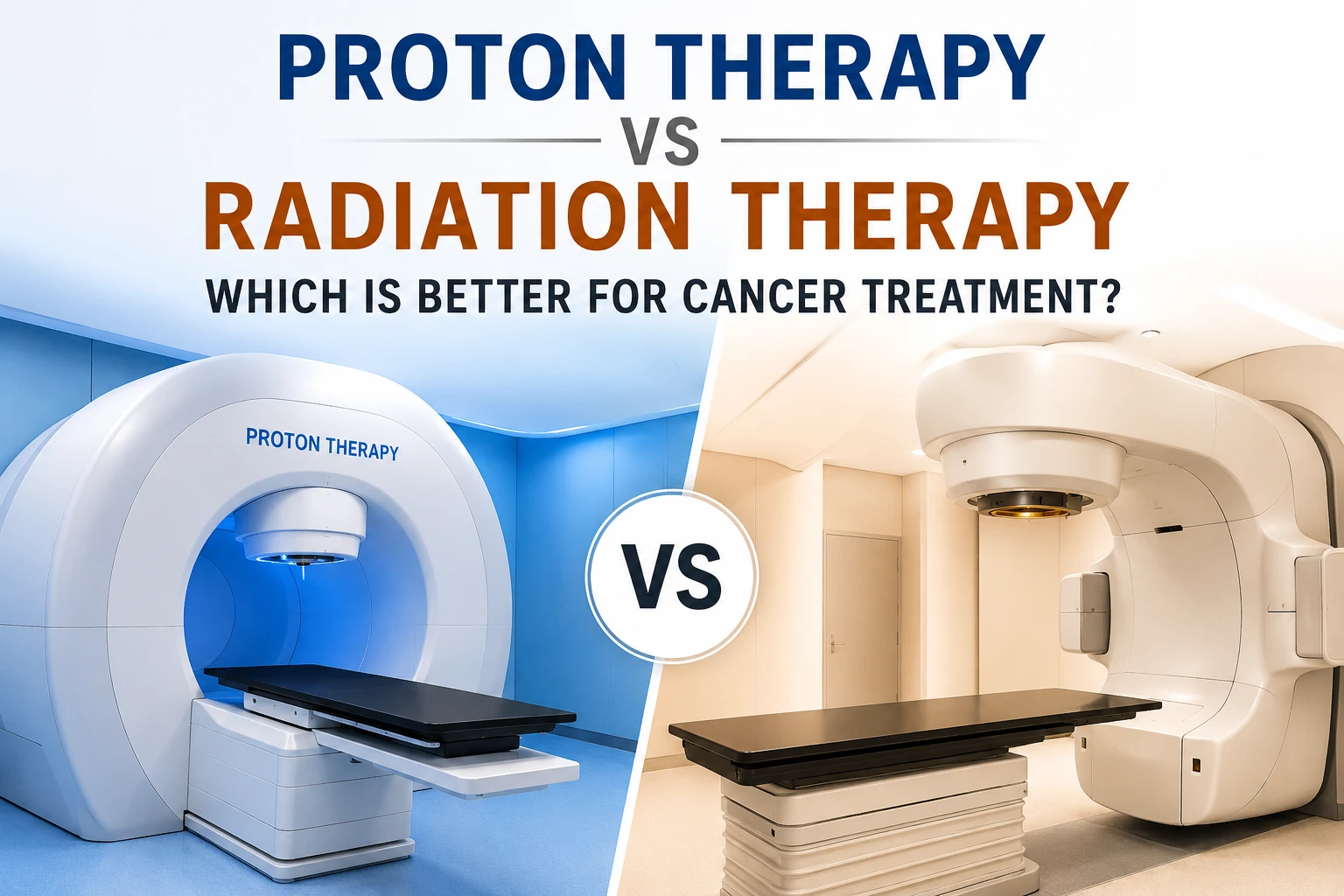
Your oncologist gives you two treatment options, both of which use radiation but are different from each other. After several weeks of tests, appointments, and tough discussions, you are ready to begin the cancer treatment. The oncologist suggests radiation therapy. Then, another option is brought up by your doctor: Proton Therapy. Initially, both types of therapy seem very similar. In fact, there is radiation in both processes. Also, they are used all around the world and can be rather efficient.
However, what makes some people prefer Proton Therapy to the conventional one? The reason behind such preferences depends on the method of delivery of the radiation and the amount of healthy tissue that could be affected by the procedure. In some cases, it won’t make a huge difference. However, there will be a certain difference in other cases – especially when the tumor is close to the brain, heart, or spine; or when the patient is a child.
Choosing between Proton Therapy and radiation therapy is not always easy.
What is Traditional Radiation Therapy?
Traditional radiation therapy is a treatment involving high-energy X-ray beams that destroy cancer cells and inhibit their growth.
Doctors use special techniques to focus these beams on the tumor. However, after they reach it, X-ray beams pass through the body and can affect some surrounding healthy tissues too.
Modern radiation therapy has achieved unprecedented accuracy and remains exceptionally effective against various types of cancer, including breast, lung, prostate, head and neck, colorectal, and gynecologic tumors.
Its greatest benefit is accessibility. Most cancer centers all over the world provide access to Traditional radiation therapy, which is cheaper compared to Proton Therapy. This treatment modality is safe and effective for millions of cancer patients each year.
What is Proton Therapy?
Proton Therapy is a sophisticated technique using positively charged particles, called protons, to deliver cancer treatment. In other words, traditional radiation therapy passes through a tumor and goes further, while proton beams deliver most of their energy inside it.
The Bragg Peak effect makes it possible to target cancer cells more accurately without exposing the nearby healthy tissue to high levels of radiation. This approach may prove invaluable in cases where the tumor is located close to vital organs such as the brain, spine, heart, eyes, and others.
Proton therapy is often used to treat:
- Pediatric tumors
- Brain tumors
- Tumors of the head and neck
- Selected breast cancers
- Spine tumors
- Selected prostate tumors
Also Read: What Is Proton Therapy – Its Benefits, Applications & Procedure
Proton Therapy vs Radiation Therapy
| Factor | Traditional Radiation | Proton Therapy |
| How it works | X-rays pass through body | Protons stop at tumor |
| Healthy tissue damage | Higher | Significantly lower |
| Best for | Most common cancers | Brain, head & neck, pediatric, breast |
| Side effects | More frequent | Fewer long-term effects |
| Sessions required | 30–45 typically | 20–30 typically |
| Availability | Widely available | Limited centres globally |
| Cost | Lower | Higher |
| Success rate | Depends on cancer type | Equal or better for selected cancers |
When is Proton Therapy Indicated?
Proton Therapy is especially indicated for cases in which there is a need to minimize exposure to healthy tissues.
Pediatric Cancers
Children are still growing, and they are therefore at increased risk for developing radiation-related problems such as other cancers.
Head and Neck Cancers
Such tumors are usually located near areas responsible for breathing, talking, hearing, and seeing.
Breast Cancers
In left-sided breast cancer, Proton Therapy might be effective in decreasing heart exposure.
Brain Tumors
Proton Therapy allows accurate tumor targeting without affecting the optic nerves, brain stem, and brain parenchyma.
Prostate Cancer
It can decrease the risk of radiation damage to the bladder and colon.
Re-Irradiation Treatment
In cases where a patient has undergone radiation before, Proton Therapy may prove helpful in reducing side effects.
When is Traditional Radiation Treatment Still a Good Option?
Proton Therapy is not always necessary. For the majority of cancers, radiation therapy works effectively. Where tumors are not adjacent to vital organs, there is no point using proton beams.
Access and cost are issues as Proton Therapy facilities continue to be limited around the world, and many patients might have to travel abroad to get treatment. The newest treatment does not mean the best; it is the treatment that provides you with the most benefit in view of your case, personal situation, and needs. Consultation with your oncology team is always the key step to know which treatment is best for your condition.
Comparing Side Effects: Proton Therapy vs. Conventional Radiation
Both Proton Therapy and traditional radiation therapy are associated with adverse reactions during treatment and the recovery period. Both procedures are likely to cause side effects such as tiredness, irritated skin in the area where the procedure takes place, temporary hair loss, trouble swallowing, vomiting, and digestive problems, depending on the location of the radiation therapy. In this aspect, there are no significant differences between the two methods; most side effects are likely to fade away after the therapy ends.
There is a crucial difference between the two types of radiation therapy regarding the consequences of treatment in terms of long-term effects. Traditional radiation utilizes photons, which pass through the tumor and irradiate surrounding organs and tissues with unnecessary exposure to the radiation, which may lead to heart, lung, bowel, bladder, brain, and other disorders.
In turn, Proton Therapy is aimed at minimizing risks associated with exposure of healthy tissues to radiation. Unlike photons, protons end their path at the tumor, thus lowering the probability of long-term complications.
In the pediatric population, the problem becomes extremely acute, as children require decades of normal life free from complications and disabilities caused by radiation and surgery.
Research confirms the advantages. A large study involving matching cohorts concluded that Proton Therapy had 48 percent fewer cases of secondary cancer than conventional forms of radiation therapy. For many patients, especially children and patients whose tumors are close to vital organs, this reduced risk is an important consideration. Proton Therapy vs Conventional Radiation Therapy: Which Is More Expensive?
On average, conventional radiation therapy will cost from $10,000 to $50,000 in the United States.
As for Proton Therapy, its cost will depend on the cancer being treated, treatment complexity, and the facility performing the procedure. On average, Proton Therapy costs from $30,000 to $120,000.
This higher cost is due to the use of more advanced techniques and technologies in treatment.
For some patients, such as children, it makes sense to pay extra money because Proton Therapy allows reducing the chances of developing secondary cancers. Quality of life is as important for cancer patients as curing cancer itself.
Does the Extra Cost Justify Proton Therapy?
In the US, traditional radiation treatment usually costs between $10,000 and $50,000.
On the other hand, Proton Therapy is more expensive; it usually varies between $30,000 and $120,000. This high price tag is due to the advanced technology and special equipment that must be used to conduct this kind of treatment.
In some cases, it can be worth the extra cost to avoid long-term complications of the treatment.
How To Determine the Best Treatment for You
No two cases of cancer are alike. As you discuss your options with your oncologist, make sure to consider:
- What kind of cancer have I been diagnosed with?
- Where is my tumor located?
- How near is it to vital organs?
- What is the age of the patient?
- Have I undergone radiation treatment previously?
- Am I a candidate for Proton Therapy at an accredited treatment facility?
These factors typically play a key role in determining if Proton Therapy is better for you.
Choosing the best option is selecting the most effective way to treat your cancer without compromising your quality of life.
Access Proton Therapy in USA
Emerge Medical Travel is the exclusive international facilitator of New York Proton Centre.
We assist patients coming to America from the UAE, Africa, India, and worldwide in accessing Proton Therapy treatment in the US.
Our services include:
- Medical records assessment
- Consultations with specialist doctors
- Treatment planning and management
- Help with traveling and visas
- Travel accommodations
- Overall patient assistance services
Request Your Free Consultation Now. WhatsApp Our Team Today
Take the first step to find out more about Proton Therapy today!
FAQ’s
- Is Proton Therapy more effective than radiation therapy?
Sometimes. The same cancer control outcomes may be achieved using both methods. However, Proton Therapy’s strength lies in minimizing exposure to normal tissues.
- Is proton therapy worth the extra cost?
In the case of pediatric cancer, brain tumors, and cancers near vital organs, some specialists find it justified.
- What type of cancers can be treated with Proton Therapy?
Pediatric cancers, brain tumors, head and neck cancers, spine tumors, select breast cancers, and some types of prostate cancers.
- Can Proton Therapy be performed if a patient has had conventional radiotherapy?
Yes, there may be situations where patients who had conventional radiotherapy could still get Proton Therapy.
- How can international patients receive Proton Therapy?
Some international patients use medical travel facilitators that assist them in consultation, treatment plans, travel arrangements, and accommodation.